If you are considering an Isuzu flatbed truck for your business in Florida, one of the first questions you may ask is whether you need a Commercial Driver’s License (CDL). The answer depends on several factors, including vehicle weight, configuration, and intended use. Many contractors and fleet owners are surprised to learn that a large portion of Isuzu trucks can be operated without a CDL. At the same time, Florida businesses often explore heavier-duty options like dump or flatbed configurations when scaling operations, which makes understanding licensing rules essential. At the start of your research, it is also useful to review available commercial truck options in Florida, such as those found at https://www.floridatrucksandparts.com/isuzu-dump-trucks-florida/, to compare capabilities and compliance requirements.
This guide explains exactly when an isuzu flatbed truck cdl is required in Florida, how non-CDL options work, and how to choose the right truck for your business needs.

Understanding CDL Requirements in Florida

What Is a CDL?
A Commercial Driver’s License is required to operate certain heavy or specialized vehicles for business purposes. CDL regulations are set at the federal level and enforced by the state of Florida. These rules are primarily based on vehicle weight, passenger capacity, and whether hazardous materials are transported.
Florida CDL Weight Thresholds
In Florida, a CDL is generally required if a vehicle has a Gross Vehicle Weight Rating (GVWR) of more than 26,000 pounds. If the vehicle is towing a trailer over 10,000 pounds GVWR, CDL requirements may also apply. These thresholds are critical when evaluating flatbed trucks for construction, landscaping, or delivery operations.
Isuzu Flatbed Trucks Explained
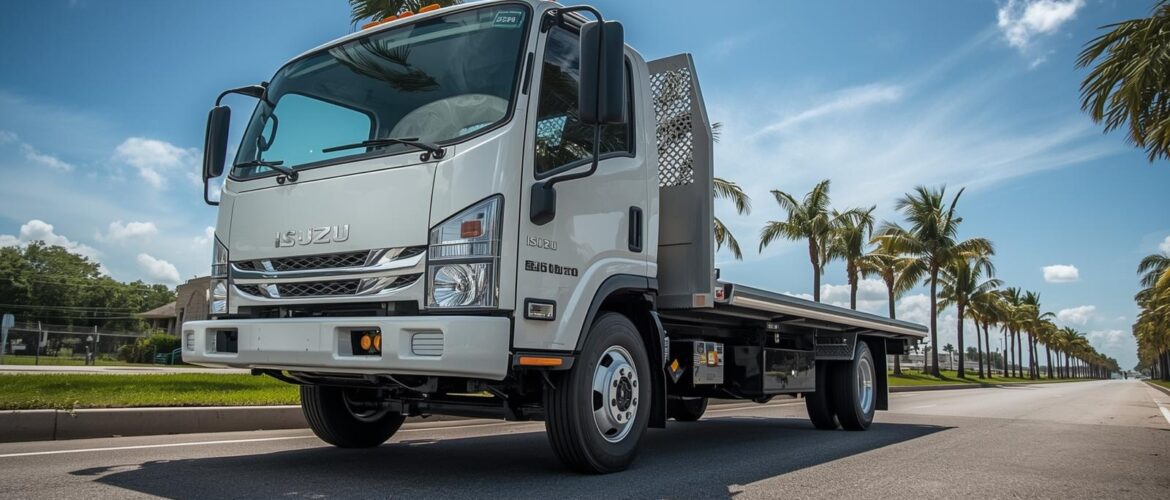
Isuzu flatbed trucks are widely known for their reliability, fuel efficiency, and versatility. Unlike pickup trucks, flatbeds provide an open platform that makes loading and unloading equipment, materials, and cargo far easier. Isuzu offers multiple chassis sizes, ranging from light-duty to medium-duty, making them adaptable for small businesses and growing fleets alike.
One of the biggest advantages of Isuzu is that many models are designed to stay under CDL weight limits while still delivering impressive payload capacity.
When Does an Isuzu Flatbed Truck Require a CDL?
An isuzu flatbed truck cdl is required when the truck’s GVWR exceeds 26,000 pounds. This typically applies to heavier Isuzu models equipped with larger engines, reinforced frames, or specialized upfits. If your business requires hauling extremely heavy materials or towing large trailers, you may cross the CDL threshold.
However, most light- and medium-duty Isuzu flatbed configurations are intentionally built to remain CDL-exempt, allowing businesses to operate with standard driver licenses.
What Is a Non CDL Isuzu Flatbed Truck?
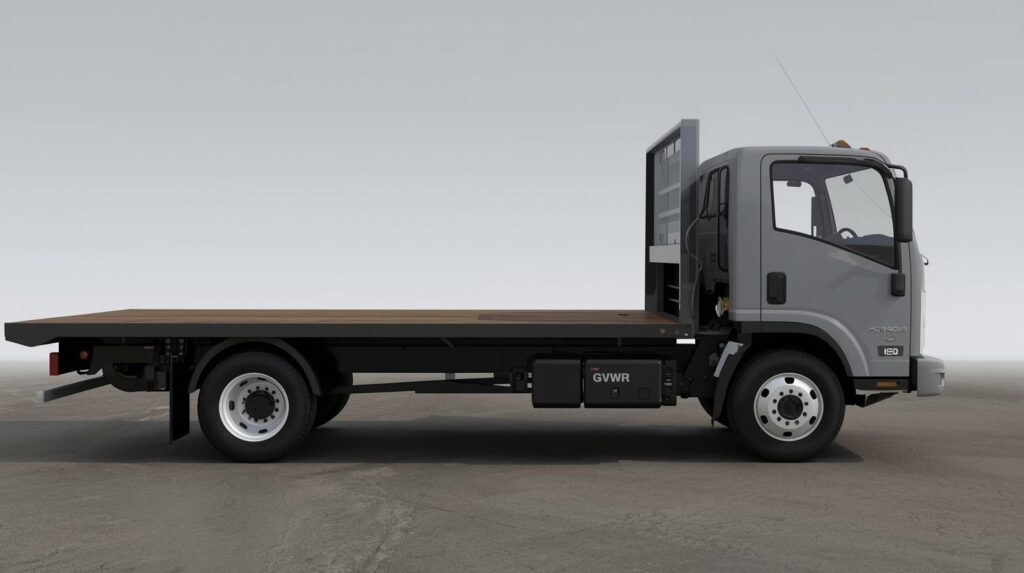
A non cdl isuzu flatbed truck is any Isuzu flatbed with a GVWR of 26,000 pounds or less. These trucks can be driven with a regular Class E license in Florida. They are ideal for businesses that want professional-grade hauling capability without the added cost and complexity of CDL training, testing, and compliance.
Non-CDL Isuzu flatbeds are especially popular among contractors, electricians, plumbers, and delivery companies.
Benefits of Choosing a Non CDL Isuzu Flatbed Truck
Choosing a non CDL Isuzu flatbed truck offers several advantages:
- Lower hiring barriers, since drivers do not need CDL certification
- Reduced insurance and compliance costs
- Easier scheduling and workforce flexibility
- Excellent maneuverability for urban and suburban routes
For many Florida businesses, these benefits translate into faster growth and lower operational expenses.
Common Industries Using Non CDL Isuzu Flatbed Trucks

Non-CDL Isuzu flatbeds are widely used across multiple industries, including:
- Construction and remodeling
- Landscaping and lawn care
- HVAC and mechanical services
- Building materials delivery
- Sign installation and maintenance
Their open-bed design allows for customized racks, toolboxes, and equipment mounts without sacrificing payload efficiency.
GVWR, Payload, and Configuration Considerations
When selecting an Isuzu flatbed, it is important to look beyond just CDL requirements. GVWR determines not only licensing but also payload capacity. A well-configured non-CDL Isuzu flatbed can still haul several tons safely and efficiently.
Upfits such as stake sides, liftgates, and reinforced beds may increase weight, so careful planning ensures you stay within non-CDL limits while meeting job requirements.
Florida-Specific Rules Business Owners Should Know
Florida follows federal CDL standards, but local enforcement can vary. Business owners should also consider DOT compliance, vehicle registration class, and insurance requirements. Even if a CDL is not required, proper vehicle maintenance, load securement, and driver safety training remain essential.
Choosing the Right Isuzu Flatbed Truck for Your Business
The right choice depends on your cargo type, average payload, and growth plans. If your operations are expanding, you may want to compare flatbed and dump configurations to see which better suits your workflow. Isuzu’s modular design allows businesses to scale without immediately moving into CDL territory.
Final Thoughts: CDL vs Non CDL Isuzu Flatbed Trucks in Florida
In most cases, you do not need a CDL to drive an Isuzu flatbed truck in Florida. A non cdl isuzu flatbed truck provides an excellent balance of power, efficiency, and regulatory simplicity. Understanding GVWR limits and configuration options ensures compliance while maximizing productivity. For Florida businesses, Isuzu flatbed trucks remain one of the smartest investments in the commercial vehicle market.