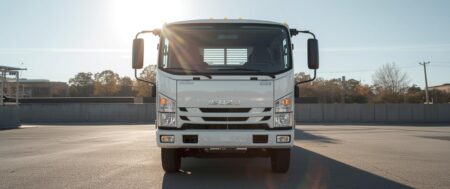
Choosing the right commercial truck is one of the most important decisions for small and medium-sized businesses in Florida. Whether you operate a landscaping company in Orlando, a delivery service in Miami, a construction business in Tampa, or a maintenance operation in Jacksonville, the truck you choose determines your productivity, operating costs, and long-term profitability.
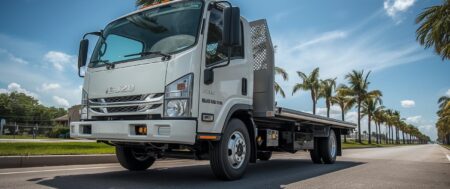
Two of the most popular medium-duty commercial trucks in the state are the Isuzu NPR and the Isuzu NRR. Both are well-known for durability, low maintenance costs, excellent maneuverability, and long lifespans. However, the NPR and NRR are built for very different workloads, and choosing the wrong one can limit your hauling capacity or push your operating costs higher over time.
This comprehensive comparison breaks down the real-world differences between the two models, including engine performance, payload strength, fuel efficiency, maintenance, and best-fit use cases for Florida businesses. By the end of this article, you’ll know exactly which truck is right for your commercial needs.
Engine & Performance Comparison

When comparing the Isuzu NPR vs NRR, the first difference business owners notice is engine capability. Although both are cab-over-engine (COE) models and share similar core design benefits—tight turning radius, high visibility, and excellent maneuverability—their engines are built for different levels of demand.
Florida businesses often operate in hot, humid, heavy-traffic environments. This means a truck’s cooling system, torque output, and transmission response matter just as much as horsepower.
Let’s break down the performance:
Isuzu NPR: Engine Overview
The Isuzu NPR is available in both gasoline and diesel options, making it one of the most flexible commercial trucks in the medium-duty market.
Gas Engine (most common in Florida):
- 6.6L V8 gas
- 350+ lb-ft torque
- Smooth acceleration for urban routes
- Lower upfront cost
- Easy maintenance
- Widely available parts
Gas NPR models are extremely popular among Florida businesses because:
- they warm up quickly in humid climates
- maintenance is cheaper
- ideal for stop-and-go city driving
- they perform well on short-to-medium routes
Diesel NPR Engines:
- 5.2L Isuzu turbo diesel
- Exceptional durability
- Designed for longer hours and heavier loads
- Excellent fuel efficiency for consistent daily driving
Diesel options are preferred by construction crews, delivery fleets, and businesses carrying moderate loads.
Isuzu NRR: Engine Overview
The NRR is exclusively diesel-powered, built for high-demand commercial applications. It delivers significantly more torque, pulling power, and overall performance than the NPR.
NRR Diesel Engine Specs:
- 5.2L turbo diesel
- Commercial-grade torque output
- Engineered for maximum load capacity
- Ideal for extremely heavy materials
- Designed for long daily operating hours
- Robust cooling system for Florida heat
Because of its power and endurance, the NRR is frequently chosen by:
- heavy landscapers
- construction teams
- tree-service companies
- hauling and debris removal businesses
- contractors carrying dense or oversized materials
Which Engine Is Better for Florida?
Choose NPR if:
- Your routes are mostly local
- You carry light or medium loads
- You want lower upfront costs
- You prefer gas engines
- You need multiple trucks for a growing fleet
- You work in residential neighborhoods
Choose NRR if:
- You haul heavy loads daily
- You run long hours and long routes
- You work in construction or heavy landscaping
- You need maximum durability and strength
You cannot compromise on payload
In short: the NPR is versatile, but the NRR is powerful.
If you’re comparing real units and want to see current availability, you can see all available Isuzu trucks for sale in Florida to compare real units.
Payload Differences

Payload capacity is the number one deciding factor for many business owners. Florida industries often transport mulch, gravel, tools, equipment, appliances, construction materials, sod, debris, or merchandise. A truck that cannot handle these loads efficiently becomes a long-term liability.
Here is how the NPR and NRR compare:
Isuzu NPR Payload Capacity
Payload varies depending on gas vs diesel, and cab configuration, but typical NPR numbers are:
- Gas NPR: ~6,000–7,000 lbs
- NPR HD Gas: ~7,500–8,500 lbs
- NPR Diesel: ~7,000–8,000 lbs
This makes the NPR ideal for:
- delivery companies
- cleaning and maintenance crews
- light to moderate landscaping
- retail distribution
- mobile services
- small contracting businesses
The NPR is strong enough for daily work but not intended for extremely heavy materials.
Isuzu NRR Payload Capacity
The NRR is built specifically to carry heavy commercial loads. Typical payload capacity:
- NRR Diesel: 12,000+ lbs
This massive payload difference is the reason many Florida industrial businesses choose the NRR.
It excels in:
- mulch and stone hauling
- debris removal
- roofing materials
- tree service and chipper applications
- heavy construction supplies
- multi-stop commercial delivery
When transporting dense or bulk materials through Florida’s hot weather and long distances, the NRR remains stable, powerful, and efficient.
Florida-Specific Payload Considerations
Florida businesses often face:
- high temperatures that strain engines
- humidity that affects cooling systems
- route congestion in major cities
- long statewide travel between jobs
A truck carrying 10,000 lbs or more through Florida heat demands a powerful cooling system and a strong diesel engine. The NRR delivers exactly that.
If your loads are lighter, the NPR remains the smarter, more cost-effective option.
Best Use Cases in Florida Industries

Different businesses require different configurations, bodies, and load capabilities. Choosing the right model ensures smoother operations and fewer breakdowns.
Below is a detailed guide to which Florida industries benefit most from each model.
Best Use Cases for the Isuzu NPR
The NPR is a favorite of businesses needing maneuverability, fuel savings, and versatility.
Ideal industries include:
1. Landscaping (Light to Medium Duty)
Transporting tools, mowers, light debris, plants, and small material loads.
2. Delivery & E-Commerce
Local delivery routes, dry goods, furniture, appliances, parcels, and retail distribution.
3. Cleaning & Maintenance Services
Pressure washing, janitorial services, restoration companies, and mobile service providers.
4. Food Distribution & Catering
Refrigerated box options available for perishable goods.
5. Construction (Light Duty)
Tools, light materials, and portable equipment transport.
6. HVAC & General Contracting
Secure tool storage and mid-weight supplies.
The NPR’s gas engine option also reduces fuel costs on short-distance routes.
Best Use Cases for the Isuzu NRR
Where the NPR ends, the NRR begins. This model is built for demanding, high-payload, multi-hour workloads.
Ideal industries include:
1. Heavy Landscaping & Tree Service
Chipper bodies, debris hauling, large mulch loads, and heavy equipment.
2. Construction (Medium to Heavy Duty)
Stone, tile, roofing materials, steel, lumber, and palletized loads.
3. Debris Removal & Junk Hauling
High-capacity dump bodies for large loads.
4. Transport & Logistics
Heavy route deliveries with dense freight.
5. Municipal & Contract Work
City maintenance, infrastructure operations, sewer and utility service.
6. Towing & Equipment Delivery
Flatbeds carrying machinery or heavy tools.
If your Florida business regularly hauls more than 8,000 lbs, the NRR is the correct model every time.
Which Model Is Right for Your Florida Business?
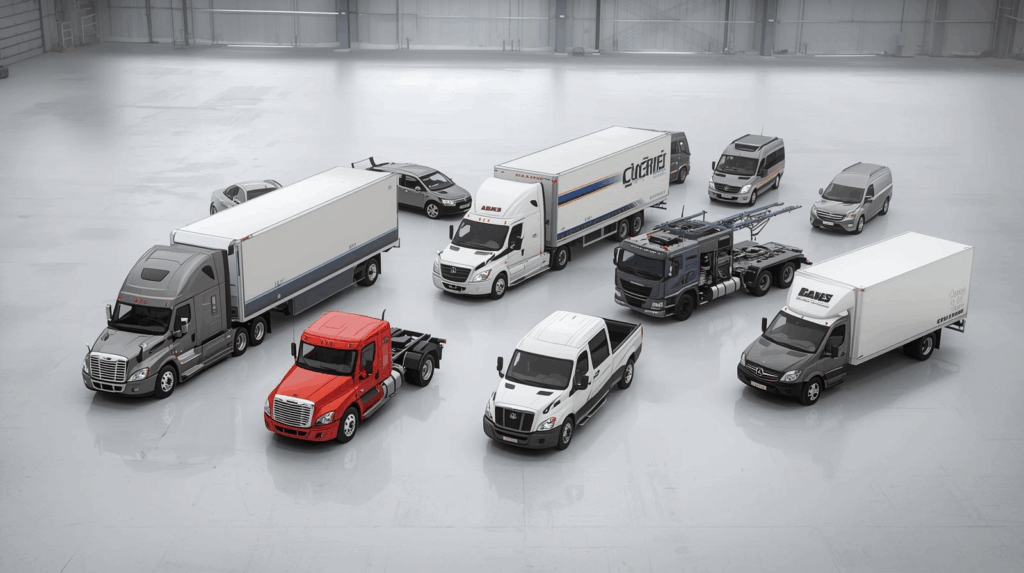
Choosing between the NPR and NRR depends on your daily workload.
Choose the NPR if you need:
- Lower upfront cost
- Flexible gas or diesel options
- Maneuverability in neighborhoods
- Good fuel efficiency for short routes
- Enough capacity for light–medium loads
- Enough capacity for light–medium loads
Choose the NRR if you need:
- Maximum payload
- Heavy-duty diesel power
- Long daily hours
- Rugged stability
- Strength for construction, tree service, or debris removal
Both trucks are excellent choices, but the right one depends entirely on your industry, load weight, and route type.